
Bryan St. Amant: The Ramble
An interview with the DtC thought leader on AI and wine and the future of the industry


For more than two decades, Bryan St. Amant has been providing wineries with tools and services to jump-start their DtC selling efforts. This job has been accomplished via VinterActive, the DtC marketing agency he founded in 2002. I’ve know Bryan for quite some time and follow his work in this sector. Originally, I was drawn to his research on winery direct sales that he first began releasing back in 2005. His latest is the VinQuest 2025 Consumer Direct Wine Sales Report.
But what really caught my eye was Bryan’s launch in February of the AI Wine Marketing Newsletter. Published on LinkedIn, the newsletter does a great job of summarizing innovation in the AI sector and how it is and can be applied to wine industry marketing. Along the way, he provides some very astute and thought provoking analysis of developments in AI. No one else is doing this in the wine space.
Bryan followed this up with the launch of VinterActive’s AI Wine Marketing Agents, built to help small wineries more efficiently apply best practices to the task of selling and marketing wine direct. Bryan is suited to this role having received an MS in Business Management from M.I.T. and a BS in Mechanical Engineering from U.C. Berkeley. Additionally, he has built AI-powered systems for governments, tech giants.
I’ve developed an interest in AI in general and AI for the wine industry. I believe this technology is in its infancy despite the fact that it is so widely deployed and used today. I wanted to talk to Bryan about AI, about how it is being deployed, and how it will be used in the wine industry. Bryan is an astute man and very engaging. I hope you enjoy this long-form Ramble with Bryan in which he answers my questions.
____________________________________________________________-
This interview approach, “The Ramble”, begins with one question emailed to the subject. They respond in any way they choose, which in turn prompts my next response, and so on. It is a less formal way of conducting an interview, results in something a bit messier and rambling, but also produces something more interesting and authentic I think.
______________________________________________________________
Tom: Bryan, thank you for doing this Ramble with me. You have been invested in artificial intelligence (AI) for a very long time. You have also been working with winery DtC efforts via Vinteractive for more than 20 years. I want to get your thoughts on the latter, but pick your brain first on the former. So, let’s first get the main question out of the way: There is trepidation about the rise of AI. All you have to do is read through the influential “AI 2027” to get a sense of the concerns. So, here’s what I’m wondering: Will AI take all of our jobs? Will AI race far beyond the capabilities of humans? Will AI make humans become obsolete? Or will AI usher in a sort of man-directed AI utopia that delivers up more leisure time for everyone, along with generous basic universal incomes?
Bryan: Tom, it’s my pleasure to chat with you!
I’ve always enjoyed your perspective on the forces shaping the direct-to-consumer wine industry. I think we share a deep respect for those who welcomed us to wine country years ago and then became our dear friends and neighbors.
And you’re correct. Before joining the wine industry, I studied artificial intelligence as a student at MIT and had the opportunity to apply AI technology in manufacturing, design, and marketing. Now, with affordable AI accessible to anyone, I’m sure thoughtful use of this technology can help wine merchants.
But, first things first…addressing the fears and fantasies promoted by the algorithms now shaping our perception of reality.
For any of your readers worried about the prospect of rogue “super-intelligent” AI systems going full “Terminator” to destroy everything we hold dear, please take a deep breath, exhale slowly, try to feel your heartbeat, and remember that not everything on the internet is real.
Killer robots controlled by villains or sentient computer networks with no need for humans are all delicious works of science fiction.
Since the word “robot” was first popularized in 1920, our human fear of the unknown has spawned a popular trope that generations of authors have profitably mined for a century.
The AI-bros who wrote “AI 2027” and other “theorists” promoting even scarier tales may ink movie deals. The billion-dollar firms hyping “superintelligence” might boost their valuations.
But in the real world, anyone using large-language models to solve even simple problems knows they’re not reliable enough to put them in charge of making any high-stakes decisions without human review.
Their ability to sound “smart” reminds me of a precocious high school sophomore who knows all the words but none of the concepts associated with critical reasoning. So, no, I don’t think AI will take all of our jobs anytime soon.
However, every form of automation – starting with the printing press and the cotton gin – was expressly designed to replace human labor. So, I don’t think AI will be any different.
In a free market, the “invisible hand” of competition often requires business owners to automate tasks, displacing entire professions. Just ask former switchboard operators or spot-welders.
But although our newly minted AI Agents already work faster than any human, they still don’t “think” or “reason” in a way humans (other than marketers) would call “intelligent.”
Human intelligence stems from the act of living, not just thinking. We might not be fast, but we experience the world through all our senses, and we show it with emotional intelligence, creativity, common sense, empathy, and faith.
As long as we still value the unique elements of human intelligence, I view AI as an incredible tool that promises to augment human intelligence rather than replace it.
Is it possible that AI will usher in a new age of prosperity, offering humanity a utopian lifestyle? I sincerely hope so.
But for now, I think that’s science fiction, too, since we evolved to survive in a world of scarcity rather than abundance. Perhaps that will change someday.
In the meantime, my approach to AI is to plan for the worst and hope for the best.
Tom: It’s good to hear from someone who thinks about these things and who doesn’t believe that robots will become our overlords…at least anytime soon. Another person in this field whom I respect made the point that in a future when AI will be doing a great deal more of the doing, the successful humans will be those folks who use their education to learn how to be great decision-makers. Do you agree?
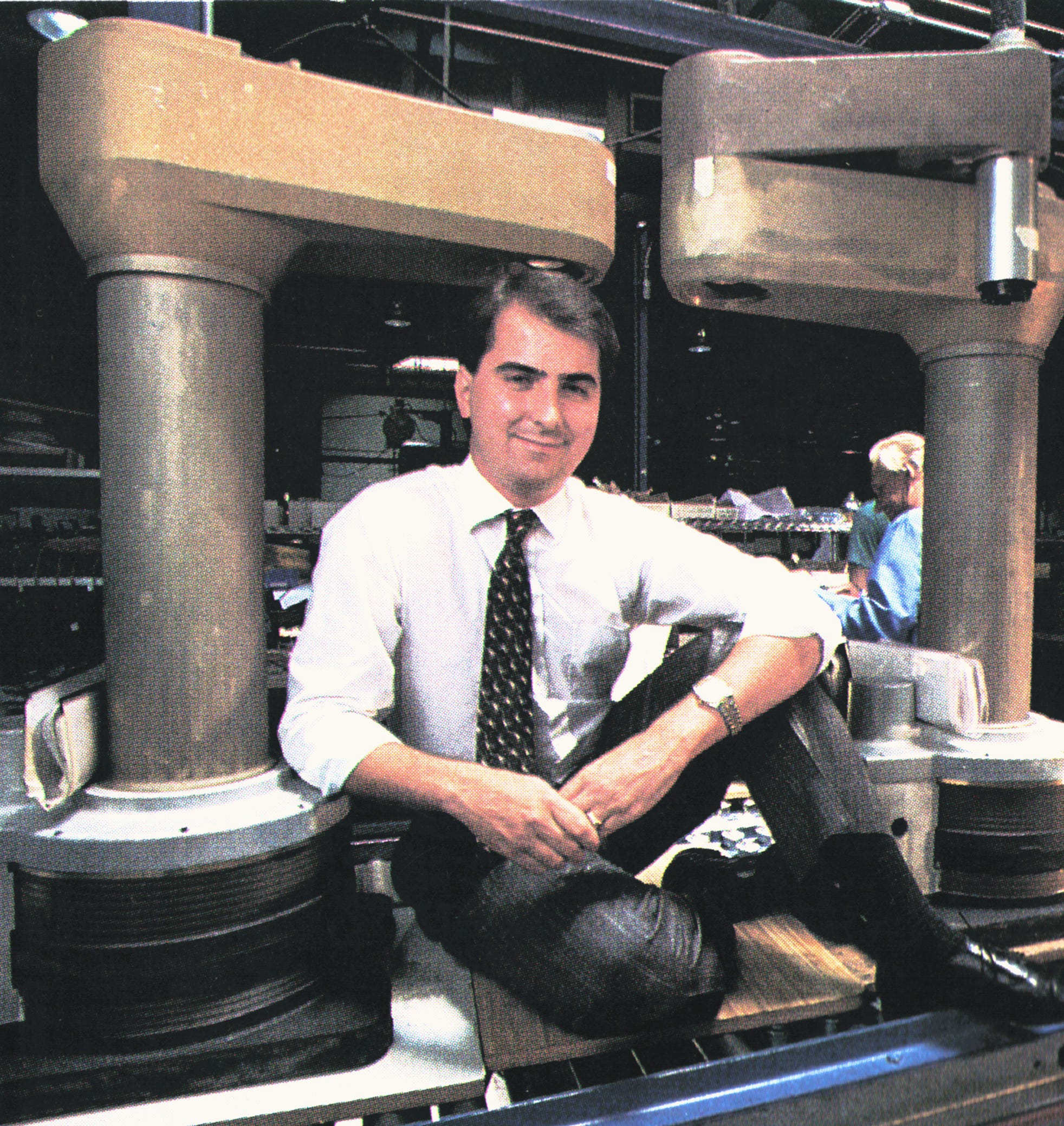
Bryan: Context can mean everything in human communication, so I'm sure your colleague's comment was contextually relevant.
But on its face, the assertion "in a future when AI will be doing a great deal more of the doing, the successful human will be those folks who use their education to learn how to be great deciders" sounds well-intended, but is built on several false assumptions:
Assuming a future where AI will be "doing a great deal more" is speculative at best.
Education is somehow more important than other factors in determining human success in an AI-powered world.
Effective decision-making will become more critical in the future than it is now.
It's not that I disagree with the potential for AI to evolve or that I don't think education or decision-making is vitally important. However, unless we're talking smack or creating funny memes, I always dismiss assertions offered without supporting evidence or logic.
The primary reason I disagree with this assertion is that AI has already transformed our lives immensely. Remember, AI's been around for over 50 years. Here are just a few ways AI already affects our lives:
Automated email sequences, Building code enforcement, Credit scoring, Customer service, Dynamic websites, Facial recognition, Fraud alerts, Insurance rates, IRS audits, License plate readers, Military preparedness, Medical imaging, News & social media feeds, Online advertising, Package delivery/logistics, Preventative maintenance, Proofreading, Public utility networks, Retail pricing, Ride-sharing services, Spam filters, Weapon guidance systems, and Weather prediction.
With their exceptional failure rate, I'm skeptical that the use of large language models (LLMs) and "Agentic AI" will have a greater impact on us than the pragmatic use of AI tools we already interact with. And if so, why would education or effective decision-making be more important than they already are?
Since education and effective decision-making are already virtues, your colleague's insight adds nothing of value to humans waking up to the option of using AI tools in our business and personal lives.
A more practical approach might be to treat LLMs like any other productivity tool, like spreadsheets, email, or the internet. Ask others in similar roles - as parents, workers, consumers, paper pushers, marketers, sales managers, and executives - how they use AI to succeed. Experiment with AI tools to learn their strengths and shortcomings. Maybe take a class or two. Then, use the tools that work for you while you live your life.
In my experience, being a "successful human" has very little to do with artificial intelligence.
Tom: Let’s put a pin in what it means to be a “successful human”. That discussion might wear out our readers. Let’s head toward VinterActive. You have deployed what you call AI Wine Marketing Agents, geared primarily towards DtC marketing. “Agentic AI” is a phrase that is relatively new to the lexicon. As though we were traveling up an elevator and a few people with us pushed buttons for some floors before ours, explain what the VinterActive AI Marketing Agents deliver for a winery DtC program.
Bryan: Thanks for asking about VinterActive.
From the beginning, our goal has always been to help DtC merchants maximize sales by customizing “off-the-shelf” marketing solutions for the wine industry. We’ve done it with email marketing, ecommerce, SMS, and now with AI-powered wine marketing agents.

“Agentic AI” is a term coined by product marketers to describe solutions trained to use artificial intelligence for making routine business decisions, then acting as “agents” by completing tasks on behalf of their human counterparts.
But whatever we call our LLM-based AI assistants, it turns out they’re pretty good communicators.
When trained on any wine brand, our VinterActive AI Agents can:
Sell wine across multiple channels (chatbots, social media, text/email)
Answer questions from retail customers and club members
Suggest travel arrangements, wine pairings, and special offers
Provide 24/7 customer service in a brand-appropriate voice and
Advise merchants on best practices in DtC wine marketing
Research conducted by Harvard Business School, which studied the impact of pairing human marketers with AI assistants, found that a single brand marketer working with AI outperformed two professional marketers assigned the same business task.
What type of business routinely employs only one marketer? Small DtC wine brands!
When I recognized this alignment, I learned everything I could about using AI for wine marketing and how to train LLMs to become competent agents that can multiply the efforts of small marketing teams. I hope our work will help our industry.
Tom: When I think of AI, I think of efficiency, Bryan. And I think you are correct in singling out the small DtC wine producer as the entity that might benefit most quickly from the incorporation of AI tools. It’s impossible to escape the talk of AI today. “Agentic” and “Agents” are two of the phrases that keep popping up more frequently. Would you briefly explain how an AI is “trained on a wine brand” and what it means?
Bryan: I agree with you in equating AI with efficiency. To me, it’s just another form of automation, like industrial robots or business productivity software.
So, if suitably programmed “AI Agents” can help DtC wineries deliver better products or customer experiences while generating higher profits, I expect this technology will become as commonly used as spreadsheets.
However, today we’re only just beginning to learn how to use this technology effectively.
Vendors offering “AI Agents” are now experimenting with various methods to train AI assistants to produce results comparable to those of a competent human intern. And we’re one of them.
Before I answer your question about how to train AI Agents, I should mention the difference between training LLMs, like ChatGPT, versus training brand-specific AI Agents.
ChatGPT learned words by absorbing vast amounts of internet content, while AI Agents typically retrieve proprietary data and consult business rules while assisting customers.
For example, an AI Agent might refer to tasting notes, inventory updates, wine and food pairings, marketing promotions, sustainability practices, shipping policies, brand guidelines, event calendars, FAQs, and escalation procedures when serving customer needs.
In this way, AI Agents are substantially “smarter” than untrained LLMs when chatting with consumers about a specific DtC wine brand.
Training a customer-facing agent, such as a virtual Wine Club Concierge, comes down to sharing the knowledge, rules of thumb, and specific workflows that your agent should follow when interacting with consumers.
It’s like training a well-spoken intern. The first step is to decide what job(s) you want them to do, how you want them to do it, and then set performance standards. If your brand has employed interns in the past, you might already have training materials on file.
If not, start by creating an official job description, job aids, and reference materials, as well as performance standards and detailed workflows that your agents should follow.
For agents interacting directly with consumers, we typically start brand customization by creating an appealing persona. Chatbots often have a name, an avatar (human or otherwise), and a distinct communication style (ranging from chatty and informal to concise and formal) that suits the brand they represent.
After creating a persona, we upload the knowledge required for our agents to address specific customer needs. Fortunately, well-designed winery websites typically contain all the necessary information to train an AI customer service agent.
In practice, AI decision rules might resemble instructions like this: “When a user asks about our winter hours, scan this webpage to generate an answer.” Or, if a wine club member requests a refund, you might instruct your agent to inform the customer that their message is being forwarded to the wine club manager, who will contact them directly.
Since our clients sell wine, our training also includes guardrails to ensure that customer conversations comply with federal, state, and local regulations.
Like training any marketing intern, onboarding an AI Agent is typically an iterative process. So, after the first round of training, it’s crucial to test a new agent’s performance as they navigate common customer scenarios. Just like humans, you’d be surprised by the mistakes a newly trained AI colleague might make.
Even after your AI Agent clocks in for their first shift, training continues in the form of supervision. That’s why our AI Agents alert their supervisor if they don’t know an answer or if a guest isn’t satisfied with the agent’s response.
A proven way to enhance an AI Agent’s performance is to chat with it about a customer interaction that didn’t go exactly as planned. Then ask your agent what other rules or knowledge you can provide to help them do a better job next time.
Like adding any new team member, successfully incorporating AI Agents requires planning, preparation, and patience. On the plus side, AI Agents never forget, don’t call in sick, work 24/7, do what they’re told, and cost significantly less than adding more human labor.
For small brands without a budget to hire more help, AI Agents can make a big difference for wineries that have a clear plan to justify the nominal costs of incorporating AI into their teams.
Tom: Having a “well spoken” and “competent intern” who doesn’t need healthcare and doesn’t take time off and who wants to work 24/7 is pretty compelling. What will it take for AI agents to deliver up a “well spoken, competent middle manager”?
Bryan: What an intriguing question, Tom!
You got me thinking about what it takes for any manager – human or otherwise – to become a well-spoken, competent middle manager in the eyes of upper management and front-line staff.

I think the answer to your question depends on the primary role middle management performs in an organization, as well as the type of front-line staff that requires management.
When I was a middle manager, I learned success required developing three distinct skill sets: subject matter expertise, people management skills, and business management foresight.
Middle managers can serve as professional enforcers, mentors, and/or coaches tasked with winning a high-stakes competition. And now, front-line staff can be either AI or human, working individually or as part of a highly integrated team.
If we’re talking about AI middle managers tasked with supervising other AI agents performing specialized subtasks, several prominent vendors already sell AI agents advertised to do just that. We’re working on the same thing at VinterActive.
In some contexts, we’re now able to deliver competent, well-spoken AI middle managers.
But supervising people, aligning with upper management goals, and motivating diverse teams to work together is far more complex than double-checking the work of an AI agent.
People are messy. They possess a vast range of personalities. They have bad days and good days, and they have lives outside of work.
In the context of people management, AI agents have a lot to learn. In professional settings, AI agents employed as middle managers will need to earn the respect of their human employees.
If technology advances to the point where AI agents can be trained to manage people with some degree of social intelligence, I’m sure we’ll see successful human teams led by AI middle managers.
But what’s more likely, in my opinion, is that if technology advances to the point where AI agents become effective middle managers, the same underlying technology would also alleviate the need to employ any front-line human workers at all.
Will that ever happen over time? Maybe yes, maybe no.
Although this technology seems like science fiction now, I’m sure my grandparents, if they were still alive, would be gobsmacked by the world we live in now. So, I’m not ruling anything out.
Tom: This idea of “not ruling anything out” is what guides me in thinking about AI and the future. I think about my first forays into thinking about what’s to come when I was a tween back in the mid-70s, and I’m absolutely positive that if you described to me then what I see around me now, I’d have insisted that it was a far-away version of a world that resembled science fiction. I think about what my boy, who is 11, will see develop by the time he is 50, and honestly, I can’t imagine it. But…speaking of imagining it, I think what you have and are building at Vinteractive takes a certain amount of imagining and foresight. Let’s go beyond the AI niche. Let’s look at the wine industry and wine drinking in America. It is in flux, to say the least, with what I see as systemic changes. But I want to know what you see. I want to know what you think our industry looks like 20 years from now.
Bryan: Thanks for your kind words about our AI projects. But the work we're both doing now is motivated by the needs of a rapidly changing industry, and AI wine marketing becomes irrelevant if we can't compete for the love of a new generation of consumers.
So let's talk about the big picture, what's going on in the DtC wine industry, and how it might look in the future.
My perspective is biased by experience in both the world of wine and in other industries. I don't know that I possess any unique foresight into the future, but I feel like we've seen this movie before as 'traditional' industries modernize over time.
An article I wrote earlier this year, "Surviving Marketing Myopia in the U.S. Wine Industry," frames the wine industry's woes as a textbook case of marketing myopia. This sometimes fatal condition afflicts industries with a long record of success that stubbornly focus their marketing efforts on what's worked well in the past, even when technology and consumer taste change over time.
As you mentioned, systemic changes are already afoot in the wine industry.
Consumers have more choices than ever when it comes to adult beverages. Laws have changed, allowing functional ingredients like THC/CBD into the game. Technology has provided us with ways to remove alcohol from fermented grapes and grains to produce tasty NA beverages. And as long as governments fund public health initiatives, future consumers will be steeped in anti-alcohol messaging starting at a young age.
If these trends continue, I think we'll see two wine industries emerge: a smaller traditional wine industry that still equates wine with alcohol, and perhaps a larger industry that equates wine with fermented grapes crafted into adult beverages that may or may not contain alcohol or other psychoactive ingredients.
I'm rooting for a bigger tent we can still call the "wine industry."
Either way, I look forward to seeing how our industry evolves over the next two decades. With luck, we can both revisit this interview in 20 years and raise our glasses to toast the good fortune of working in a field we love, no matter how our predictions panned out
Tom: Thank you for the Ramble, Bryan.