

As far as I can tell, only one set of awards for wine writing and communication is currently running: The 67 Pall Mall Global Wine Communicator Awards. I’m not sure the genre deserves more than one award, but that’s an entirely different article.
The 2026 edition of the 67 Pall Mall Global Wine Communicator Awards was recently announced. Six different categories of communication are honored.
One of the six awards has been widely identified by individuals and by AI Detectors as generated almost entirely by AI.
This affair has generated moderate discussion in various corners of the Internet. What’s interesting about this discussion is the air of resignation that pervades the comments. I think, however, that this kind of embarrassing turn of events should generate far more interest and attention. Why hasn’t it?
Henry Jeffreys has written the best (only?) account of this wine version of “L’Affair d’AI” in his Drinking Culture newsletter. I urge you to read it.
To summarize, the Best Global Wine Communicator in Short-Form Writing award was given to Fikayo Ifaturoti for her entry “The Stradivarius Violin × 1969 Bollinger VVF”. I think it is a facile piece of writing that should not be in the proximity of a writing award. How the panel of well-known communicators who judged these awards ended up honoring this piece of “writing” is very difficult for me to understand, if the goal was simply to highlight the best writing. The writing is not as bad as some of the stuff I’ve published in my 20+ years of writing for public consumption, but it comes very close. That’s not good.
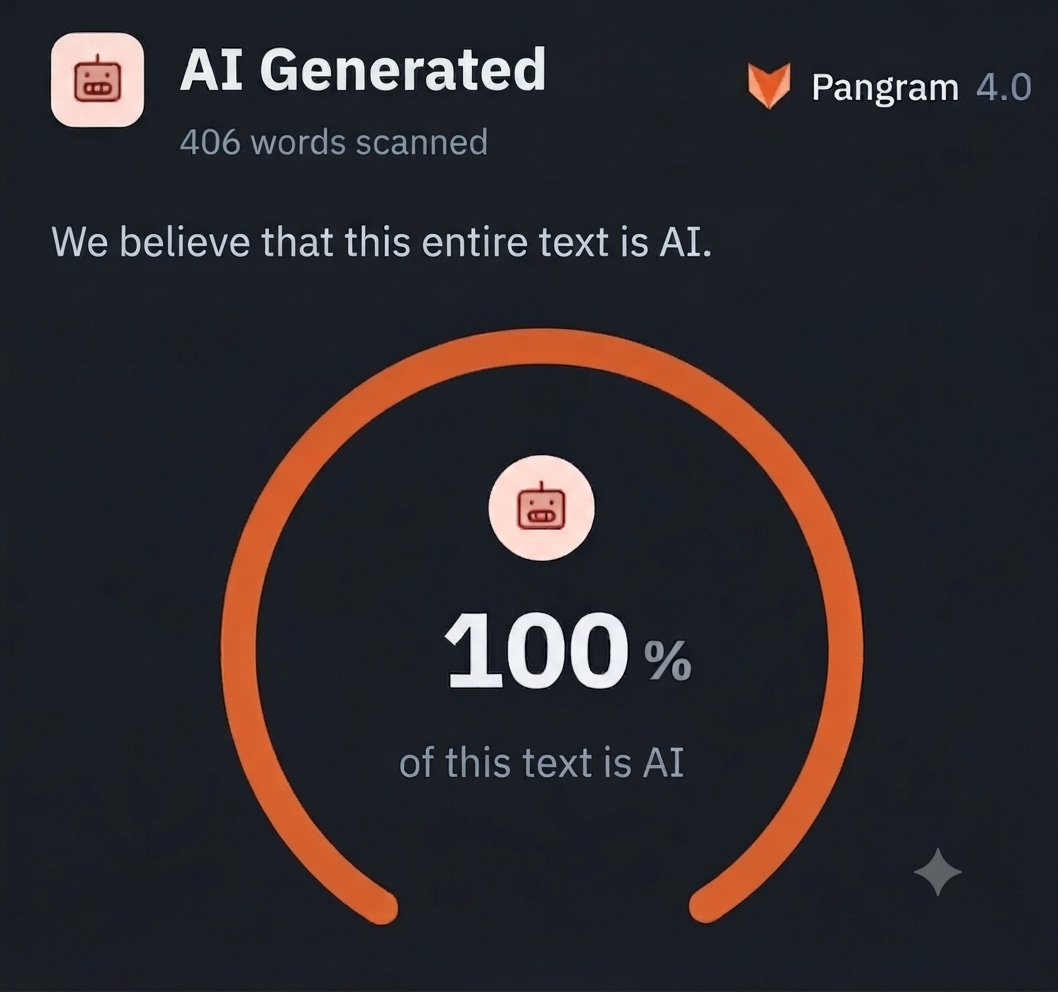
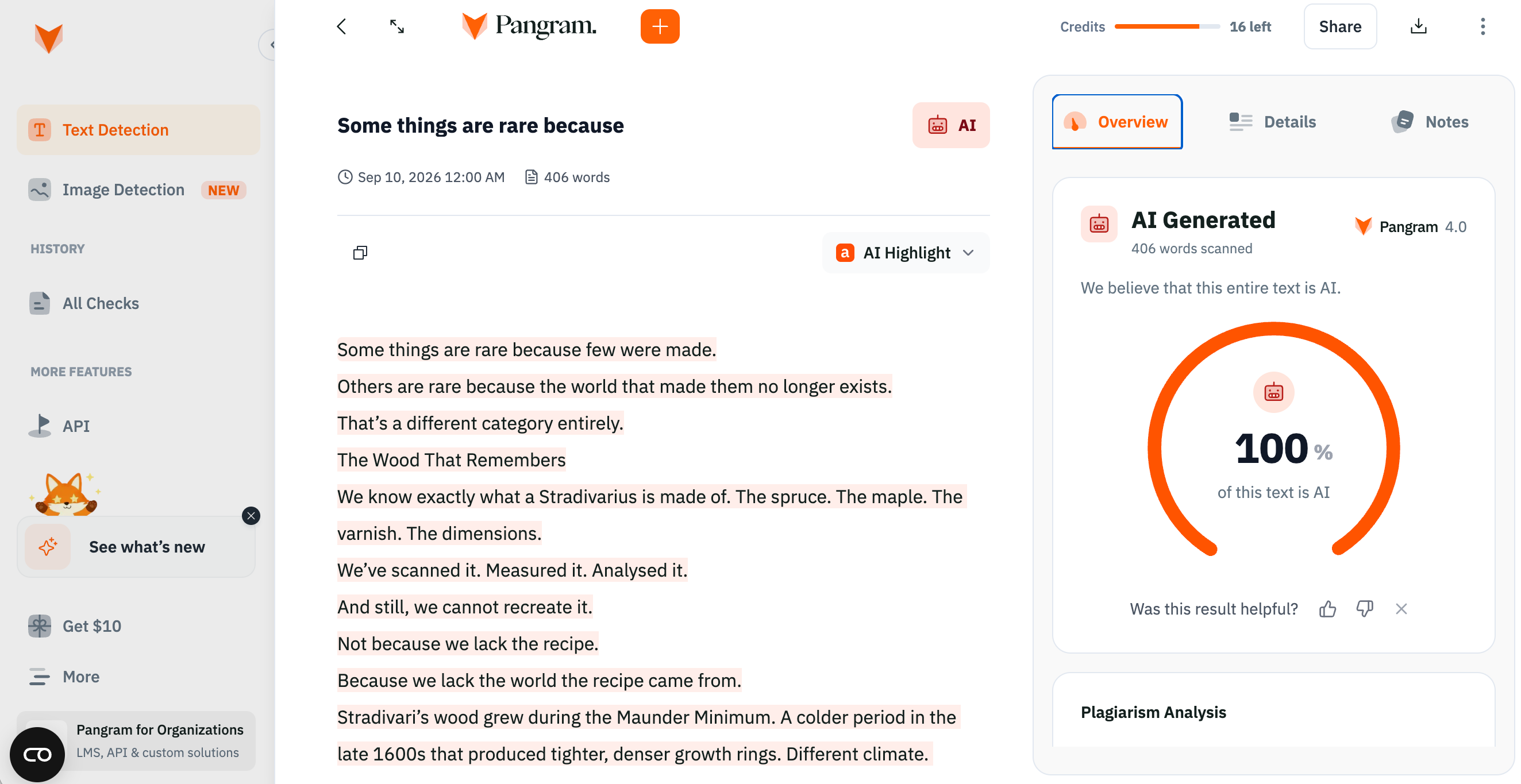
More importantly, the piece is highly likely to be AI-generated. In fact, Pangram, perhaps the best-known and most widely used AI-detection tool with a spectacularly low false positive rate, identified the piece as “100 AI-Generated”. ChatGPT identified it as 80% likely to be AI-generated. Google Gemini came to a similar conclusion. The piece was not apparently written by a human being. It was, however, passed off by Ms. Ifaturoti as an original work of writing. But, hey, maybe the AI-Detector is entirely wrong. Maybe the extensive tests that have shown Pangram’s ability to detect AI-generated prose are overstated or fraudulent. Maybe the experience of those who can identify the hallmarks of AI-generated prose is not enough to be trusted. Maybe I’m wrong. Maybe Jeffreys is wrong. Maybe it was written entirely by Ms. Ifaturoti (eye roll).
The ability of our new AI tools to help people who, for whatever reason, have difficulty putting their ideas and thoughts into a coherent written order is genuinely welcome…and a welcome leap in technology. But there is obviously a very dark side that needs to be explored, understood, and dissuaded.