

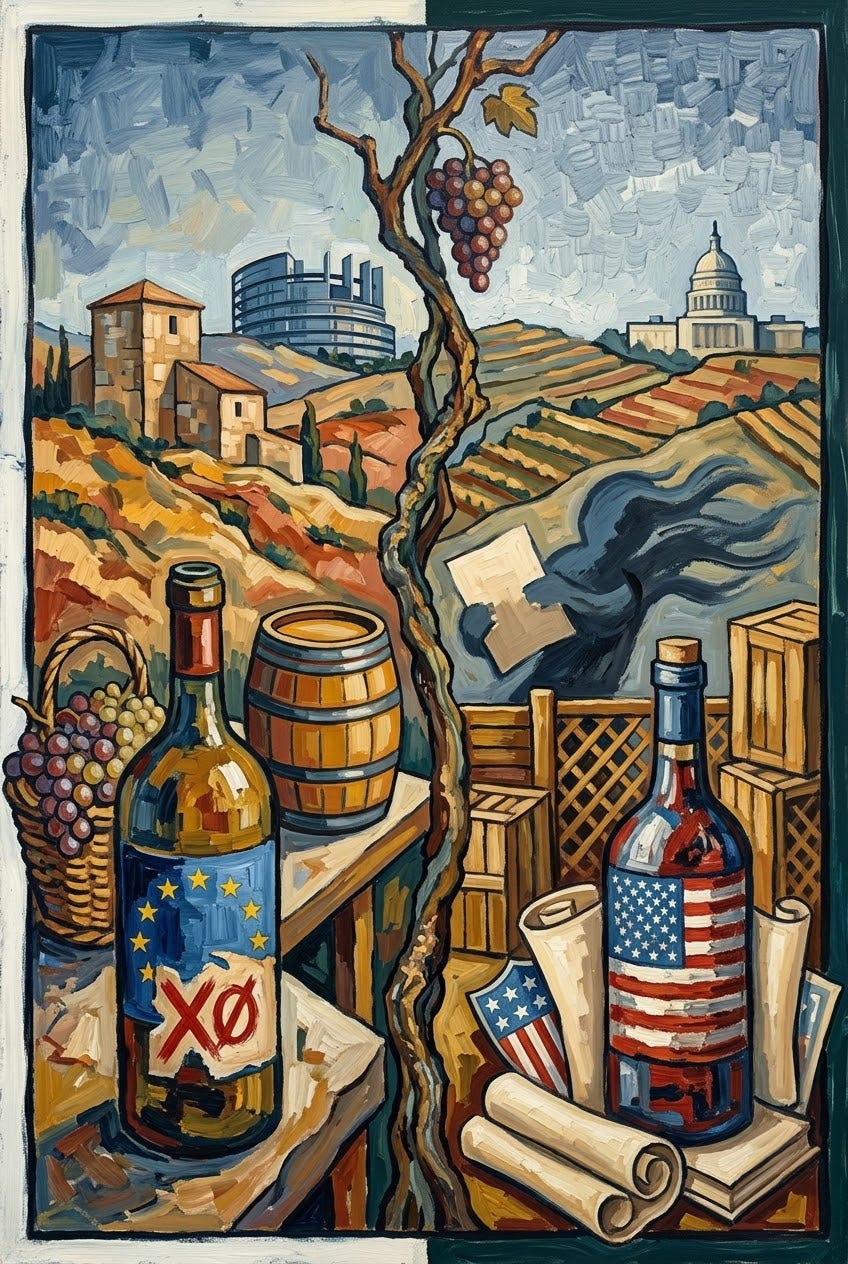
Not too long ago, in late September, wineries of the European Union dodged a bullet. Had that bullet found its target, Europe’s vignerons, Vignaioli, and Vitivinicultores would have been printing up labels for every bottle they produced that exclaimed the wine inside the bottle would cause cancer.
No one is entirely sure how to calculate the impact of cancer warning labels pasted on every bottle of wine produced and sold in France, Spain, Germany, Greece and the rest of the EU, other than that the calculation involves large, negative numbers.
On September 28, the Subcommittee on Public Health of the European Parliament met to discuss proposed directives that, if adopted, would result in cancer warning labels on EU wines, changing institutional wording that accepted distinctions between “harmful” and moderate consumption to there being “no safe level” of alcohol consumption, and that recommended severe restrictions on the marketing of alcohol…including wine.
These were the initiatives that had been inserted into proposed EU directives on cancer prevention, but which first had to move through the Public Health Subcommittee before being adopted by the full EU Parliament on November 11. The Public Health Subcommittee did not accept them. A coalition of factions accepted amended language that replaced these draconian, anti-alcohol, World Health Organization-devised initiatives with a more pro-wine, pro-agriculture replacement.
That coalition of factions that ultimately pushed back on and rejected the WHO-designed attacks on wine and its future in the EU is something that everyone should take note of, including those of us in the wine industry in the United States, where we don’t quite yet have to face down the same kind of attacks.
On September 28, the European Parliament’s Public Health Subcommittee voted 27-8 with 5 abstentions to adopt alternative language that rejected the “no safe level” language and preserved the distinction between harmful and moderate alcohol consumption, rejected on-bottle cancer warning labels, and said “no” to heavy-handed restrictions on alcohol marketing and instead focused on preventing marketing to children. The vote and the subcommittee’s rejection of the WHO-inspired “No Safe Level” language was a very big win for wine. And when, on November 11, the full EU Parliament adopts this pro-wine language on cancer prevention that will form the foundation for actual EU-wide initiatives, a coalition of national and ideological factions will chalk up a win.
IDEOLOGY VS ECONOMICS
Like the United States, the EU is made up of member “states” that elect representatives to the EU Parliament in Brussels. It’s the equivalent of our House of Representatives, not our Senate. Yet representatives elected to the European Parliament do have national loyalties that lead them to support or reject initiatives, as well as ideological motivations.